02031613720
Learn why manufacturing companies follow ISO standards to improve quality, safety, compliance, and trust across production, supply chains, and operations.
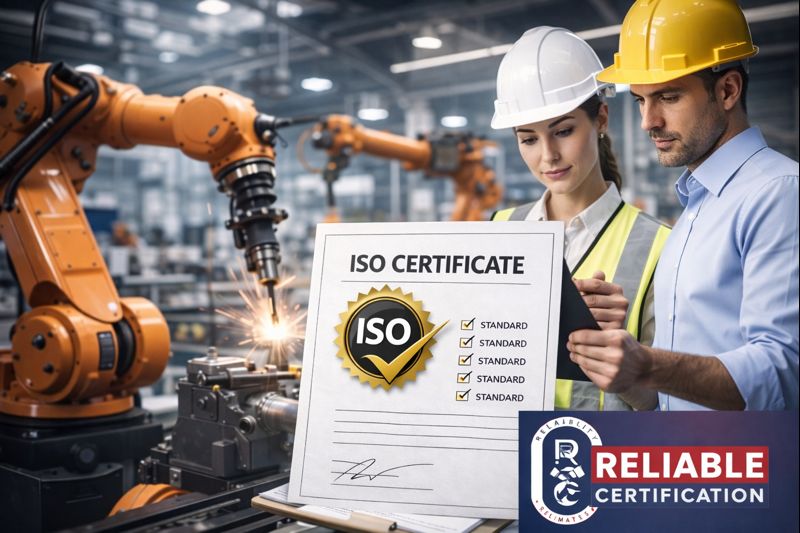
Manufacturing companies are an essential part of any economy. They produce the goods people use every day, from food and medical devices to machinery, electronics, and building materials. Because of this responsibility, manufacturers are expected to work in a controlled, safe, and reliable way.
ISO certification standards help achieve this by providing internationally recognised frameworks for quality, safety, risk management, and operational efficiency. These standards guide companies to maintain consistency, meet customer expectations, and reduce errors.
This guide explains why manufacturing companies follow ISO standards, how these standards support different industries, and why they are important for long-term business success.
ISO stands for the International Organization for Standardization. It develops global standards that help organisations work in a consistent and responsible way.
In manufacturing, ISO certification demonstrates that a company follows a recognised management system. It ensures that production processes, workplace safety, environmental responsibility, and data security meet international expectations.
ISO standards are practical tools to help manufacturers improve performance and trust.
Learn more about ISO 9001 for manufacturing
Manufacturing businesses face many risks. Mistakes in production, safety incidents, or poor-quality goods can have serious consequences. ISO standards help companies:
Adopting ISO standards is not just about compliance it supports better decision-making and sustainable growth.
Quality is at the heart of manufacturing. ISO 9001 is the primary standard for quality management. It helps businesses:
By following ISO 9001, manufacturers can produce goods that consistently meet customer and regulatory expectations.
Environmental management is essential in manufacturing. ISO 14001 helps companies reduce environmental impact by:
Manufacturers adopting ISO 14001 can meet environmental regulations and demonstrate a commitment to sustainability.
Read more about ISO 14001 Environmental Management
Manufacturing can involve machinery, chemicals, and other hazards. ISO 45001 focuses on occupational health and safety:
ISO 45001 helps companies create safer working conditions and maintain legal compliance.
Digital systems and connected supply chains are increasingly common in manufacturing. ISO 27001 provides a framework for managing sensitive information, including production data, supplier information, and intellectual property.
Additional standards include:
These standards ensure that manufacturing operations remain secure while maintaining trust with clients and partners.
Manufacturers face unexpected disruptions like natural events, cyber-attacks, or supply chain failures. ISO 22301 provides guidance on business continuity:
Companies following ISO 22301 can continue operations even in challenging circumstances.
Energy is a major operational cost for manufacturing companies. ISO 50001 helps manage energy efficiently:
ISO 50001 is particularly relevant for energy-intensive industries.
Discover ISO 50001 Energy Management
Certain industries have specialised standards that apply to their products and processes:
Adopting these standards ensures safety, regulatory compliance, and operational efficiency.
Let’s look at a perfume manufacturing company to understand how ISO standards are applied in real life.
The company produces fragrances, skincare products, and cosmetics for international markets. Here’s how ISO standards support their operations:
By following these ISO standards, the perfume company improves product quality, ensures employee safety, reduces environmental impact, and maintains trust with customers and international partners.
ISO standards provide long-term benefits to manufacturing companies, including:
These benefits not only improve business performance but also build a reputation for reliability and professionalism.
ISO certification standards are essential for manufacturing companies to maintain quality, safety, efficiency, and trust. They provide a structured approach to:
Following ISO standards is more than just compliance it is a commitment to continuous improvement, operational excellence, and building trust with customers, suppliers, and stakeholders. By adopting these standards, manufacturers can improve efficiency, reduce risks, and enhance their reputation in an increasingly competitive market.
Learn more about ISO standards for different industrie
 1
1
Typically replies within 30 minutes