02031613720
Get ISO certified for rail ensure safety, quality & compliance with ISO 9001, 14001 & 45001 for railway companies, suppliers & infrastructure firms.
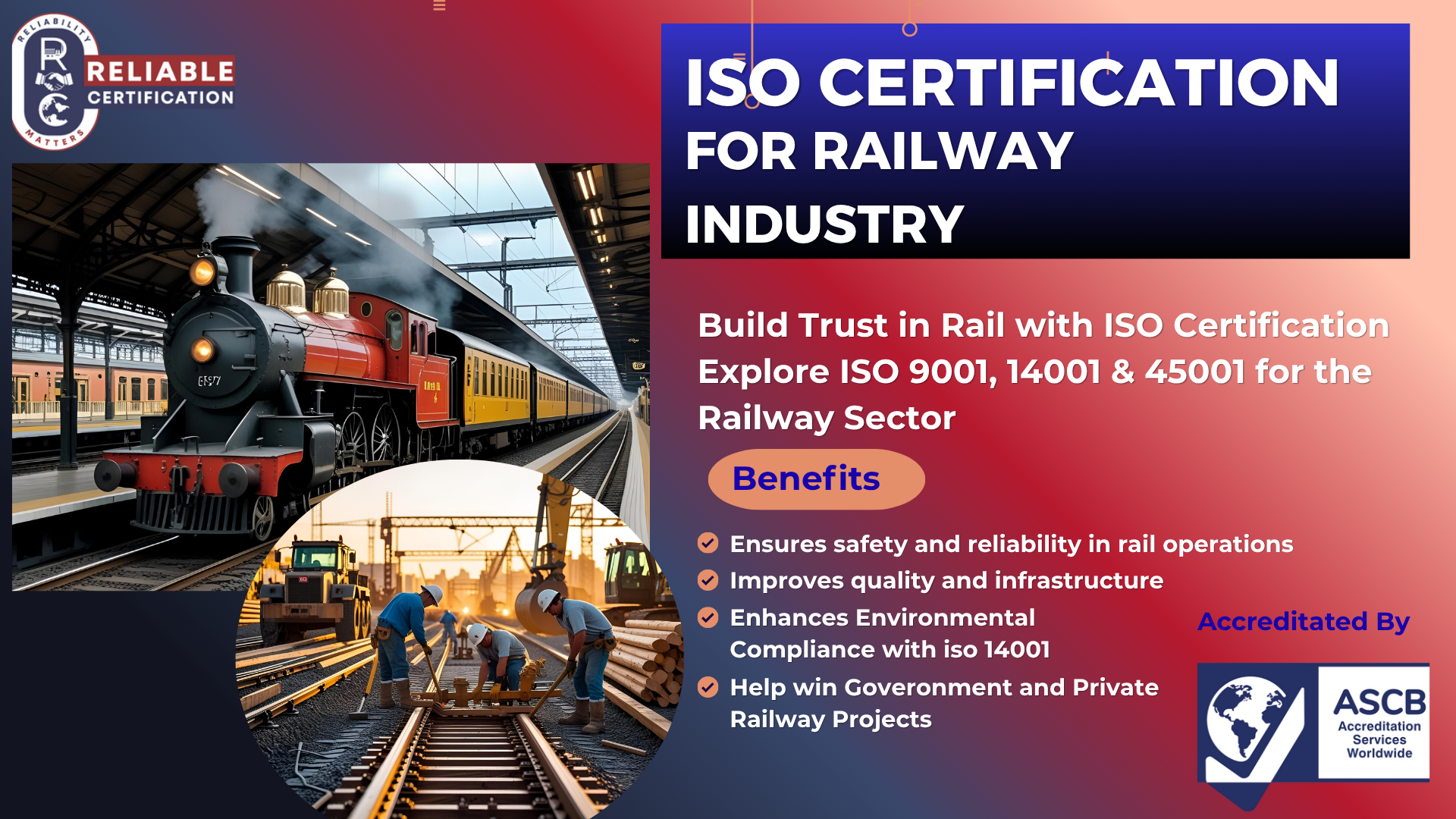
The railway industry plays a vital role in connecting cities, countries, and economies. From transporting passengers to delivering goods across long distances, railway systems must operate with precision, safety, and reliability. To maintain high standards across such a complex and demanding sector, many rail companies are turning to ISO certification for railway industry.
ISO certification provides a globally recognized framework for improving quality, managing risk, ensuring safety, and meeting environmental responsibilities. Whether you're a rail operator, infrastructure company, or maintenance contractor, ISO standards can help elevate your performance, win trust, and remain compliant with strict regulations.
In this blog, we explore the key ISO standards for the railway sector, their benefits, and how railway ISO certification services can transform your business operations.
The railway industry is highly regulated due to the risks associated with public safety, environmental impact, and operational complexity. Even minor failures in processes, systems, or equipment can lead to severe consequences. That’s why ISO certification for rail companies has become an essential part of modern railway management.
ISO standards provide structured systems that allow companies to:
Whether it's manufacturing rail components, managing infrastructure, or running passenger services, ISO certification for railway industry brings professionalism and global recognition to your operations.
Several ISO standards are directly applicable to the railway sector. Each one supports a different area of business quality, safety, environment, or management. Here are the most relevant:
ISO 9001 for railway industry is the most widely recognized standard for implementing a Quality Management System (QMS). It ensures that rail companies follow consistent processes to deliver reliable services and meet customer expectations.
Railway manufacturers and operators can greatly benefit from ISO 9001 by reducing delays, improving asset performance, and aligning with industry expectations.
Rail transport is considered more eco-friendly than other modes, but it still has a significant environmental impact through noise, emissions, and infrastructure development. ISO 14001 railway compliance helps organizations identify and minimize their environmental footprint.
By adopting ISO 14001, rail companies can promote green practices, win eco-conscious tenders, and support national carbon reduction goals.
The rail industry poses high safety risks for both workers and passengers. ISO 45001 for rail industry focuses on implementing a robust Occupational Health & Safety Management System (OHSMS).
This railway safety ISO certification not only protects workers but also assures regulators and clients that the company prioritizes health and safety.
Infrastructure companies that build and maintain railway tracks, bridges, and stations play a critical role in public transportation. With tight deadlines, high costs, and strict safety standards, these firms must operate at the highest level.
ISO certification for rail infrastructure companies ensures:
By combining ISO 9001, ISO 14001, and ISO 45001, infrastructure firms can ensure end-to-end quality, safety, and environmental management on major rail projects.
Quality and safety go hand in hand in rail. A minor quality failure can quickly become a major safety issue. That’s why quality and safety ISO certification in railway sector is not just about compliance it’s about building a dependable and resilient railway system.
Key advantages include:
With ISO standards in place, rail companies can focus more on performance and less on firefighting operational problems.
A UK-based railway component supplier was struggling to secure deals with major clients. Despite offering good products, they lacked a structured approach to quality and compliance.
After implementing ISO 9001 for railway industry and ISO 14001 railway compliance, they saw:
They later added ISO 45001 for rail industry, which improved worker safety and earned them preferred supplier status with a major European rail operator.
This case illustrates how ISO certification for rail companies can open doors to growth and global recognition.
Getting ISO certified may seem overwhelming, but with the right guidance, the process is straightforward. Here’s how railway ISO certification services typically work:
A trusted consultant can help you every step of the way saving you time and ensuring success.
While not legally mandatory, ISO certification is often required by clients and government contracts as part of the prequalification or tendering process.
It depends on company size and readiness. Typically, it takes 2 to 6 months to implement the standards and complete the audits.
Absolutely. Even small suppliers, contractors, or maintenance teams can benefit from ISO certification to improve operations and win more contracts.
Railways are all about precision, safety, and efficiency and so is ISO. Whether you’re a large rail operator or a small supplier, ISO certification for railway industry helps you stay compliant, improve operations, and build trust with clients.
From ISO 9001 for railway industry to ISO 45001 for rail industry, the right standards can help you grow safely and sustainably.
At ReliableCert.uk, we provide expert railway ISO certification services for companies across the UK, Pakistan, UAE. Our team helps you implement ISO standards quickly and effectively so you can focus on what matters most: delivering reliable rail services
 1
1
Typically replies within 30 minutes