02031613720
Learn how ISO 22000 certification ensures food safety, quality, and compliance for food businesses. Boost trust, meet legal standards, and access new markets.
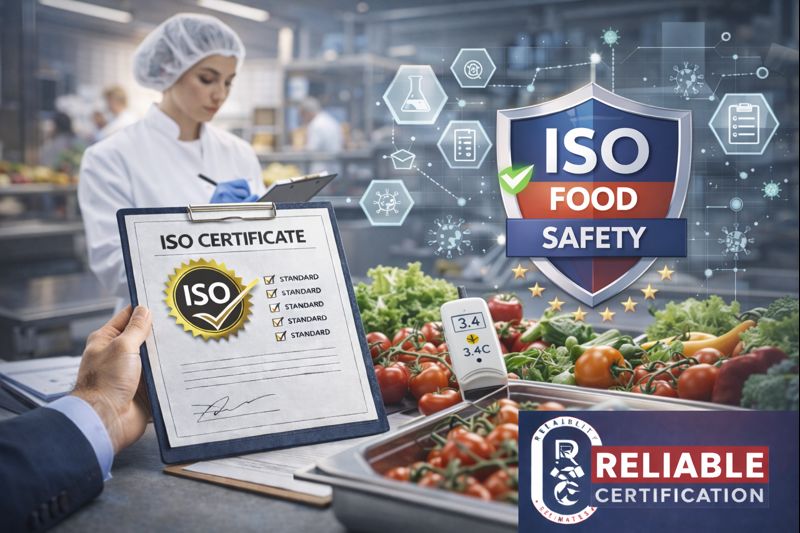
In today’s global food market, consumers expect high standards of quality and safety. Whether you’re a food manufacturer, processor, or distributor, meeting these expectations isn't just about good business it is about protecting public health and gaining trust. That’s where ISO certification for food products comes in.
If you operate in the food industry, obtaining the right ISO certification can help your business demonstrate food safety, meet legal requirements, and access new markets. In this article, we’ll explore what ISO certification means for the food sector, especially the importance of ISO 22000 food safety management, and how your company can benefit from ISO compliance for food industry operations.
ISO certification for food products is a formal recognition that your company follows international food safety and quality standards. These standards are created by the International Organization for Standardization (ISO) and are designed to ensure consistency, hygiene, and traceability across the entire food supply chain.
The most widely recognized standard in the food sector is ISO 22000, which focuses specifically on food safety management systems. Read a detailed blog for ISO Certification for the food industry.
Any business involved in the food supply chain can benefit from ISO certification for food industry, including:
Even small food businesses and startups can use ISO 22000 to build credibility and grow sustainably.
ISO 22000 certification is the global standard for Food Safety Management Systems (FSMS). It helps businesses identify, control, and reduce food safety hazards from farm to fork.
The standard combines elements of:
HACCP is a method used to find and control anything that could make food unsafe.
With ISO 22000, your team will:
This system helps you prevent problems before they happen.
GMP is all about keeping things clean, safe, and well-managed in your food facility.
Under ISO 22000, you’ll need to:
GMP sets the basic hygiene rules that every food business should follow.
By achieving ISO 22000 for food businesses, you prove that your processes are consistent, transparent, and focused on delivering safe food products.
This helps your business meet global standards and gain trust from both local and international customers.
ISO 22000 requires your organization to build a structured management system around food safety, which includes:
This holistic approach makes ISO 22000 ideal for food processing companies and manufacturers aiming to reduce risks and meet compliance standards.
Getting ISO certification for food manufacturers offers several strategic advantages:
These benefits apply whether you’re producing snacks, beverages, packaged foods, or raw ingredients.
When working with a certification body like Reliable Certification, you’ll go through a structured process to achieve your ISO 22000 certification. Here’s what that usually involves:
A pre-audit assessment of your current processes to identify what’s missing or non-compliant.
Guidance in preparing your Food Safety Manual, procedures, hazard control plans, and other required documentation.
Your team puts the system into action, with internal audits and training to ensure everyone is on the same page.
An independent auditor verifies that your system meets all ISO 22000 requirements.
Upon passing the audit, you receive your ISO 22000 certificate valid for three years with annual surveillance audits.
There are other food safety certifications, like BRCGS, FSSC 22000, and IFS, but ISO 22000 stands out because:
If you already have ISO 9001, integrating ISO 22000 is a natural step forward.
Food processors face high scrutiny when it comes to hygiene, cross-contamination, temperature control, and packaging. ISO for food processing companies helps build systems that manage all these critical areas efficiently.
For example:
With ISO 22000, your facility becomes more resilient, audit-ready, and trustworthy in the eyes of regulators and customers.
ISO compliance is not just about getting a certificate. It’s about building a culture of safety and continuous improvement. Whether you’re a local bakery or an international food brand, ISO compliance for food industry businesses helps:
ISO certification for food products is more than a requirement; it’s a commitment to safety, quality, and customer trust. With ISO 22000 certification, your food business can operate confidently in an increasingly competitive and regulated industry
 1
1
Typically replies within 30 minutes