02031613720
Learn ISO 9001 requirements clause by clause in simple terms. A clear guide to quality management, compliance, and business improvement.
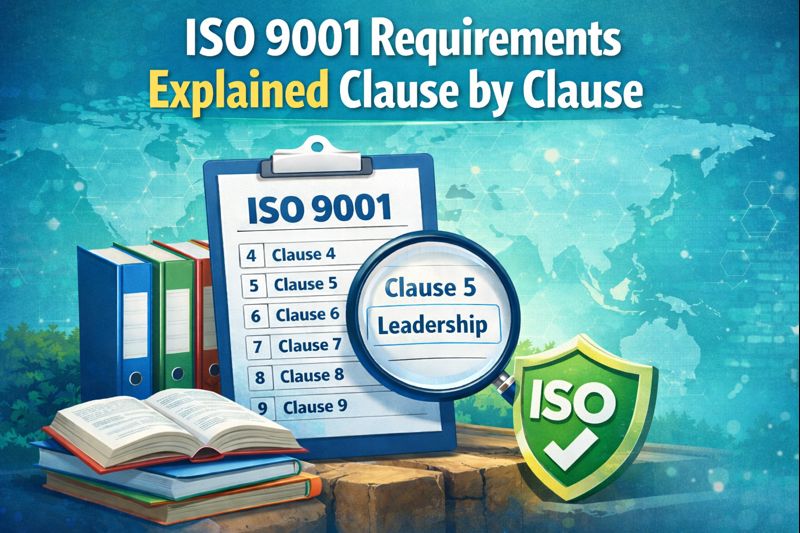
ISO 9001 is an international standard that explains how a quality management system should work. It helps organisations deliver consistent products and services that meet customer needs and legal requirements. Instead of focusing on products, the standard focuses on how work is planned, managed, and improved.
This guide explains each ISO 9001 clause in clear and simple language. It is written as an educational resource to help organisations understand the standard step-by-step and apply it in real business situations.
ISO 9001 helps organisations improve how they operate. It encourages better planning, clearer responsibilities, and stronger control over daily activities. When quality processes are well managed, errors are reduced, communication improves, and trust increases.
The standard is used across many industries and works well alongside other ISO standards related to environment, safety, information security, food safety, energy, service management, and business continuity.
ISO 9001 follows a structured format with ten clauses.
Clauses 1 to 3 explain the scope, references, and definitions.
Clauses 4 to 10 contain the actual requirements.
Each clause builds on the previous one, creating a complete quality management system from planning to improvement.
This clause explains what ISO 9001 applies to and who can use it. The standard is suitable for all types of organisations, regardless of size or industry.
It confirms that ISO 9001 is flexible. Organisations can design a quality system that fits their activities, as long as customer and regulatory requirements are met consistently.
This clause refers to ISO 9000, which provides definitions and basic concepts used in ISO 9001.
No action is required. This clause exists only to support understanding of the standard.
This clause explains key terms used throughout ISO 9001. These definitions help avoid misunderstandings and ensure consistent interpretation.
Clear understanding of terms supports correct implementation and smoother audits.
Organisations must identify internal factors such as structure, resources, and knowledge, as well as external factors like regulations, market conditions, and customer expectations.
Interested parties include anyone affected by the organisation’s work. Understanding their needs helps ensure the quality system remains relevant.
The organisation must clearly define what is included in the quality management system and explain any exclusions.
Key processes must be identified and understood. This helps ensure work is consistent and controlled.
Leadership must take responsibility for the quality management system. Quality cannot be delegated without involvement.
A quality policy must explain the organisation’s commitment to meeting requirements and improving quality. It should be communicated and understood by everyone.
Clear roles and responsibilities help ensure accountability and effective decision-making.
Organisations must identify risks that could affect quality and opportunities to improve outcomes.
Objectives should be clear, measurable, and aligned with business goals. Progress must be monitored.
Any planned changes must be managed carefully to avoid negative effects on quality.
The organisation must ensure enough people, infrastructure, and suitable working conditions are available.
Employees must have the right skills, training, and experience for their roles.
People should understand the quality policy, objectives, and the importance of meeting requirements.
Communication must be planned to ensure information is shared clearly and effectively.
Documents and records must be accurate, controlled, and protected.
Work must be planned so products and services meet requirements consistently.
Customer needs must be reviewed before accepting work to avoid misunderstandings.
If design is involved, it must be planned, reviewed, and controlled to reduce errors.
Suppliers and contractors must be controlled to ensure quality is maintained.
Activities must follow clear instructions, with checks completed before delivery.
When requirements are not met, issues must be identified, controlled, and corrected.
Organisations must measure performance and customer satisfaction to understand results.
Audits help confirm whether the quality system works as planned and follows requirements.
Leadership must regularly review the quality system to ensure it remains effective and suitable.
Problems must be corrected, and root causes identified to prevent recurrence.
Improvement should be ongoing, helping organisations adapt and strengthen over time.
ISO 9001 shares a common structure with many other ISO standards. This allows organisations to integrate quality with environmental management, health and safety, information security, food safety, energy management, and service continuity.
This alignment supports better compliance, stronger controls, and long-term trust. For more detailed guidance and information, you can also read this blog: What Is ISO 9001? Understanding Quality Management Systems
What is ISO 9001 mainly used for?
It is used to manage quality processes and ensure consistent delivery of products and services.
Is ISO 9001 suitable for small organisations?
Yes. The standard is flexible and can be applied by organisations of any size.
Does ISO 9001 require a lot of paperwork?
Documentation is required, but the main focus is on effective processes, not paperwork.
How often should ISO 9001 systems be reviewed?
Systems should be monitored continuously, with regular audits and management reviews.
Can ISO 9001 be combined with other ISO standards?
Yes. Its structure allows easy integration with other management system standards
 1
1
Typically replies within 30 minutes