02031613720
Discover how much ISO certification costs in the UK in 2025, including pricing ranges, influencing factors, hidden expenses, industry examples, and cost-saving tips. Learn how ISO standards help win contracts and improve business performance.
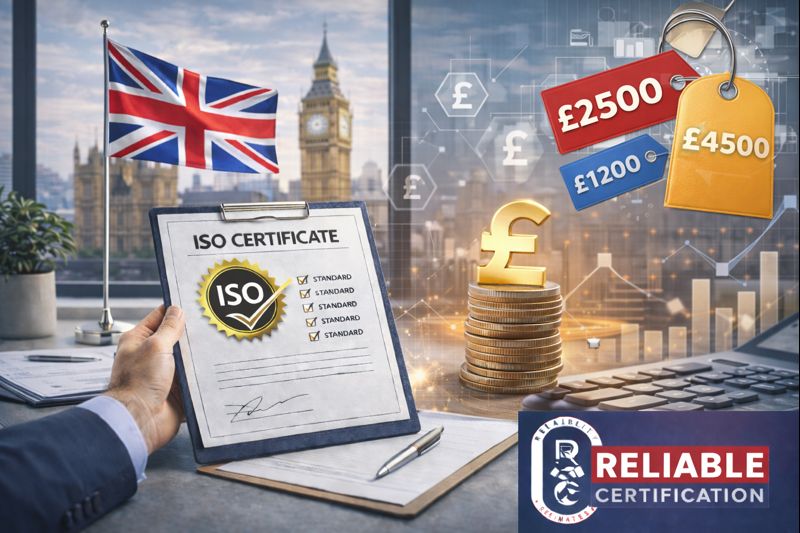
In 2025, ISO certification remains one of the most trusted ways for UK businesses to prove professionalism, compliance, and consistent quality. Whether you are a growing SME, a busy contractor, an IT security provider, or a food supplier, gaining ISO certification can unlock opportunities that might otherwise remain out of reach.
But despite the benefits, the most common question business owners ask is simple:
“How much does ISO certification cost in the UK?”
While there isn’t a single fixed price, this guide breaks down realistic costs, hidden expenses, factors that influence pricing, industry comparisons, and how to budget smartly.
ISO (International Organization for Standardization) creates globally recognised standards that define how businesses should operate. These standards help organisations:
Common certifications include:
Because these certifications are internationally recognised, they open doors to large contracts, government tendering, and supply chain partnerships.
To explore the standards directly, visit:
👉 https://www.iso.org/standards.html
Costs vary depending on your company’s size, industry and processes. Here’s a realistic average:
£900 – £2,500 per year
£2,500 – £6,000 per year
£6,000 – £15,000+ per year
These figures include:
Remember: ISO certification operates on a 3-year cycle, so costs are spread out.
Think of ISO certification like building a house the final cost depends on:
Every business builds its management system differently. As a result, iso certification cost in the UK can’t be one-size-fits-all.
Here is how the overall cost usually divides:
|
Cost Category |
Typical Range |
|
Stage 1 (Documentation Review) |
£400 – £1,200 |
|
Stage 2 (Main Audit) |
£700 – £2,000 |
|
Annual Surveillance |
£500 – £1,200 |
|
Recertification (Year 3) |
£800 – £1,500 |
|
Consultancy Support |
£800 – £15,000 |
Software, training, and internal labour can also add cost depending on the business.
Let’s go deeper:
Auditors examine how many people follow the management system. More employees = more time.
Multi-site organisations require additional audit days.
A simple retail shop won’t be audited the same way as a cybersecurity company.
Chemical handling, food safety, and data security require detailed checks.
If you already have documentation, training records, and internal audits, you will pay less.
UKAS-accredited certificates cost slightly more, but are widely recognised and trusted.
To make this practical:
Often complex due to legal obligations and safety environments.
£4,000 – £10,000 per year
ISO 27001 includes technical controls and infrastructure assessments.
£6,000 – £15,000+
Safety controls (ISO 22000) require strict documentation.
£3,000 – £9,000
Medium complexity, depends on machinery and environment.
£2,500 – £8,500
Lower operational risk.
£1,200 – £4,000
Your timeline affects price. On average:
Faster timelines may cost more if you require urgent consultancy support.
Many businesses assume the cost is just for the certificate, but it covers:
You’re investing in your business maturity not just a document.
If you see offers like:
“ISO certification in 24 hours for £300!”
It’s often:
Cheap certificates may cost your business more in lost opportunities.
Consultants aren’t mandatory, but they offer:
Good consultants prevent costly non-conformities.
Consultancy typically costs £800 – £10,000, depending on involvement.
Some costs aren’t obvious:
The more prepared you are, the fewer surprises you'll face.
2025 is seeing the rapid adoption of compliance software. These tools:
Software typically costs £25–£200 per month, depending on features.
For companies with 10+ staff, this saves countless hours.
Remember, ISO isn’t a one-time purchase.
You will still require:
Annual maintenance costs are typically:
£500 – £3,000 per year
Depending on business size.
If you want more than one ISO standard, ask for:
For example:
ISO 9001 + ISO 14001 + ISO 45001
An integrated management system can reduce total cost by 20%–35%.
Auditors typically:
A calm, well-documented business passes easily.
Let’s look at a realistic scenario for a 15-person business:
|
Cost Area |
Price |
|---|---|
|
Initial Certification |
£2,100 |
|
First Surveillance |
£850 |
|
Second Surveillance |
£850 |
|
Consultancy Support |
£1,800 |
|
Staff Training |
£400 |
3-year total: £6,000
Average yearly investment: £2,000
Very reasonable considering the benefits.
Here’s what UK businesses report after certification:
For many organisations, the return is clear and measurable.
Let’s say ISO certification costs £2,000 per year.
If you win one new £30,000 contract because of it,
you’ve achieved a 1,500% return on investment.
Across most industries, ISO certification pays for itself.
Yes. Businesses with fewer than 5 employees often receive discounted audit days.
3 years, with annual surveillance.
Yes — but failures lead to corrective actions, not punishment.
Remote audits are now common, reducing costs.
To reduce iso certification cost for UK organisations:
These simple steps can reduce total fees by 25–40%.
If you’re competing for tenders, ISO can be the deciding factor.
When comparing quotes, ask:
It’s not just the cost — it’s the value.
Experts predict:
Certification may become even more common and expected in the supply chain.
Realistically, small to medium UK businesses should budget:
£1,500 – £4,500 per year
Depending on growth plans and industry.
While the investment isn’t tiny, the benefits are long-lasting, measurable, and competitive.
ISO certification:
Ready to make ISO certification simple and affordable? Speak with a friendly expert at Reliable Certification for effective pricing and guidance today.
You can read iso common myths guide for clear information.
 1
1
Typically replies within 30 minutes