02031613720
ISO standards improve safety, quality, and risk control in electrical work. Learn how ISO 9001, ISO 45001, and others protect workers and enhance performance.
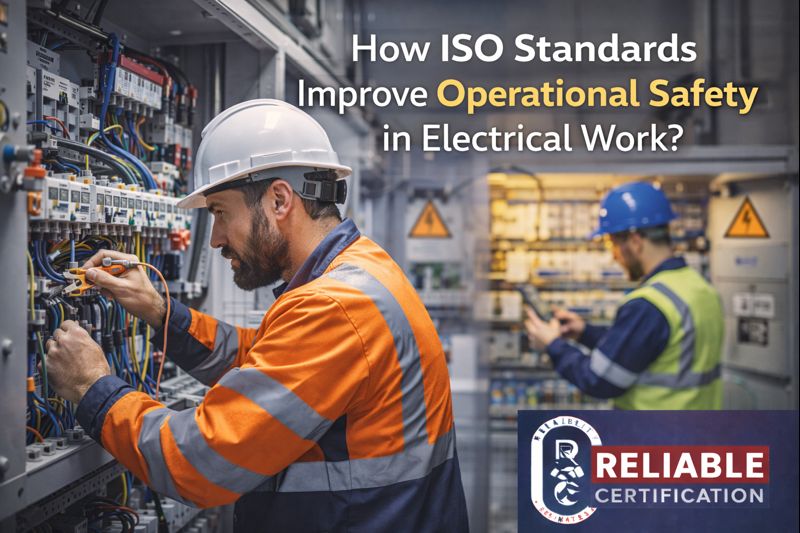
Electrical work is one of the most high-risk professions in the world, whether it’s industrial installations, high-voltage systems, construction projects, testing and commissioning, or routine maintenance. One small mistake, one missing control, or one untrained worker can result in severe injuries, operational downtime, or even fatal accidents.
This is where ISO standards step in.
Across the electrical industry contractors, maintenance teams, engineering firms, manufacturers ISO frameworks create a structured, safety-driven environment that reduces hazards, prevents accidents, and improves quality and reliability in day-to-day operations.
In this in-depth guide, we will explore how ISO standards improve operational safety in electrical work, why they are essential today, and how companies can implement them effectively to protect workers, reduce risks, and earn client trust.
Electrical hazards are everywhere. The biggest risks include:
Electric shock occurs when current passes through the body, potentially causing burns, nerve damage, or cardiac arrest. It often results from exposed wires, damaged insulation, or unsafe electrical practices.
An arc flash releases extremely high heat and light in a fraction of a second, while an arc blast produces a pressure wave that can throw workers across a room. Both can cause severe burns, blindness, hearing loss, and fatal injuries.
Electrical faults such as short circuits, overheating components, or sparks near flammable materials can trigger fires or explosions. These incidents escalate quickly in high-risk environments if controls are not in place.
Poorly installed, damaged, or overloaded wiring increases the risk of short circuits and overheating. It also leads to unpredictable electrical failures that endanger both personnel and equipment.
Electrical equipment that isn’t inspected or serviced regularly may degrade, overheat, or fail unexpectedly. This lack of maintenance increases the likelihood of accidents, downtime, and costly repairs.
Without proper PPE such as insulated gloves, arc-rated clothing, and face shields, workers are exposed to severe electrical hazards. Inadequate PPE greatly increases injury severity during electrical incidents.
Workers without proper training may misjudge electrical risks, use improper tools, or bypass safety procedures. This significantly increases the potential for accidents, errors, and unsafe work conditions.
In industries like construction, factories, public infrastructure, renewable energy, and commercial facilities electrical incidents are still among the top causes of workplace injuries and fatalities.
What makes the risk even higher is the involvement of:
Because of these challenges, electrical companies need a consistent, globally recognised safety and quality framework. ISO standards provide exactly that.
Electrical businesses typically rely on three core ISO standards:
The main safety standard that protects workers from hazards.
Ensures consistency, precision, and quality in electrical installations and engineering work.
Helps electrical contractors manage waste, chemical handling, and environmental risks.
Critical for companies managing digital drawings, SCADA, automation, or client data.
Helps improve energy performance and reduce operational inefficiencies.
Each standard contributes to safety in a unique way, but together they build a strong, reliable operational system.
Below is a comprehensive breakdown of HOW ISO standards create a safer working environment for electrical technicians, engineers, supervisors, and site teams.
Most electrical accidents happen because safety procedures are ignored, unclear, or inconsistent across teams.
ISO 45001 changes this by building a culture where:
This cultural shift alone can reduce incident rates by 40–60% in electrical operations.
ISO standards require detailed risk assessment and hazard identification, including:
ISO 45001 mandates that companies:
This predictable approach drastically reduces operational risks.
Unskilled or uncertified electricians are the #1 cause of electrical accidents.
ISO 45001 and ISO 9001 require companies to:
This ensures only qualified and trained professionals perform high-risk work.
ISO standards require companies to set clear, documented procedures, such as:
When procedures are documented and followed, mistakes drop dramatically.
Electrical work often involves:
ISO standards require:
✔ Regular inspection
✔ Calibration
✔ Servicing
✔ Inventory management
✔ Safe storage
This prevents equipment failure and electrical malfunctions.
ISO 45001 requires companies to prepare for:
Emergency drills, evacuation plans, and rescue procedures become part of routine operations.
ISO standards ensure:
This improves accountability and supports long-term safety performance.
ISO 9001 reduces errors by:
In electrical projects, where precision is everything, this results in safer and higher-quality outcomes.
Electrical tasks involve materials that impact the environment:
ISO 14001 ensures safer disposal, reduced waste, and eco-friendly handling minimising environmental hazards.
ISO certification isn’t just about safety it also boosts business.
Electrical companies with ISO certifications can:
Many government and corporate clients now prefer or mandate ISO certifications for electrical contractors.
For electrical contractors looking to achieve ISO certification, explore our dedicated services here:
ReliableCert’s ISO Certification Services for Electrical Companies
ISO standards support:
Any organisation handling electrical systems can reduce risk substantially through ISO implementation.
Imagine a medium-sized electrical services company that handles installations, maintenance, wiring, and repair work. Before ISO certification, their operations were mostly experience-based — workers knew what to do, but processes were not clearly documented. Safety practices vary from person to person, and equipment checks happen only when something goes wrong.
Now imagine the same company after implementing ISO standards:
With ISO 9001, the company creates proper procedures for electrical work, inspections, customer handling, and documentation.
Everyone follows the same process, which means fewer errors, fewer complaints, and more consistent results.
ISO 45001 brings a complete safety system into the company.
Workers receive proper training, risk assessments are done before every job, equipment is checked regularly, and accidents are reduced significantly because safety is no longer optional it is part of the company culture.
For an electrical company, environmental responsibility matters.
ISO 14001 helps them reduce waste, handle electrical components safely, and lower energy consumption. This not only protects the environment but also saves money.
The business becomes more organised, safer, and more professional.
With ISO standards, the electrical company doesn’t just "work harder," it works smarter, with better control, better reputation, and better long-term growth.
The process is simpler than most companies think:
Working with a professional certification body ensures smooth implementation and long-term benefits.
ISO standards play a critical role in improving operational safety in electrical work by providing structured processes, reducing hazards, and ensuring consistency across all tasks. With ISO 45001 ensuring worker safety, ISO 9001 enhancing quality, and ISO 14001 strengthening environmental controls, electrical companies can build safer workplaces, reduce accidents, and deliver higher-quality results to their clients.
In a high-risk industry like electrical engineering, ISO certification isn’t just a requirement it’s a competitive advantage and a vital tool for protecting workers and maintaining operational excellence.
 1
1
Typically replies within 30 minutes