02031613720
Get to know how ISO certifications help construction companies prevent hazards, improve safety, protect workers, and meet legal requirements, practical guide for UK businesses.
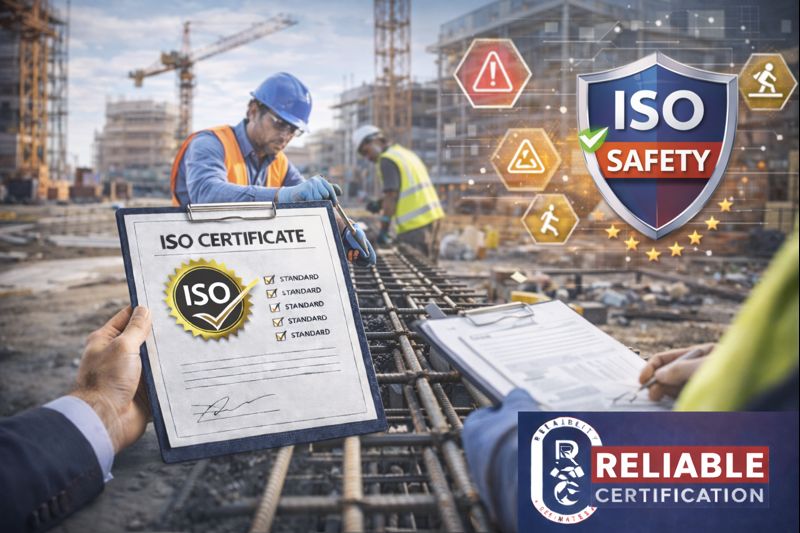
The construction industry is one of the most fast-paced and high-risk sectors in the UK. Every single day, workers face hazards such as falls from height, machinery accidents, chemical exposure, electrical risks, noise, dust, manual handling injuries, and many more. With strict regulations and increasing pressure to maintain safe working environments, construction companies are turning towards ISO certifications to create stronger safety systems and reduce workplace risks.
This blog explains how ISO certifications help construction companies prevent hazards, protect workers, comply with UK regulations, and operate with greater professionalism. It covers how each certification contributes to safer construction sites and how companies can achieve compliance through reliable service providers like Reliable Certification UK.
Construction sites are filled with dynamic activities excavation, heavy lifting, cutting, welding, electrical work, scaffolding, and chemical use. This constant movement increases the chances of accidents if safety controls are not properly managed.
Common hazards include:
ISO standards help companies control these risks by establishing safe systems of work, structured procedures, training, hazard awareness, and compliance frameworks that protect workers every day.
ISO certifications are not just documents on the wall they form the backbone of a strong safety culture. They provide frameworks that help construction companies identify hazards, manage risk, and improve operations.
Each of these standards contributes to hazard prevention in a different but complementary way.
ISO 45001 is the most relevant for construction, as it focuses on worker safety, hazard prevention, and risk management.
ISO 45001 requires companies to carry out risk assessments for every activity. This means:
This proactive approach prevents incidents before they occur.
The standard ensures that procedures are documented, communicated, and followed consistently. Workers know exactly how to perform tasks safely, from operating machinery to handling chemicals.
ISO 45001 ensures every accident, near miss, or unsafe act is reported. This data helps the company prevent recurrence and improve hazard awareness across teams.
Construction companies must comply with the Health and Safety at Work Act, CDM Regulations, and HSE requirements. ISO 45001 helps align company practices with these laws.
With ISO 45001, training becomes regular and structured. Workers learn:
This naturally reduces accidents.
The standard ensures proper use of PPE such as helmets, gloves, boots, goggles, and harnesses. Workers are trained on selection, use, and maintenance.
Read this blog ISO 45001:2018 – A Simple Guide to Health & Safety Certification for detailed information regarding hazards and safety.
Although ISO 9001 focuses on quality, it indirectly improves safety.
ISO 9001 strengthens planning, which reduces rushed or unsafe work.
Using safe, high-quality materials lowers structural risks.
Workers know who is responsible for what task, reducing confusion that can lead to hazards.
Mistakes can create unsafe conditions; ISO 9001 ensures consistent work quality.
Construction activities affect the environment, and environmental hazards can harm workers as well.
ISO 14001 helps with:
These improvements protect both the workforce and the surrounding community.
Although ISO 27001 is mostly known for information security, it can have a big impact on construction safety:
This contributes to overall risk control across the organisation.
Imagine a construction company building a commercial structure. Without ISO standards, they may face:
With ISO certifications, the situation improves dramatically:
The result is a safer, more organised, and efficient construction site.
ISO certifications bring long-term benefits:
Many contractors and local authorities also prefer working with ISO-certified suppliers.
Reliable Certification provides:
Whether you need ISO 45001, ISO 9001, ISO 14001, or ISO 27001, the process is straightforward and stress-free.
Construction sites come with serious risks, but ISO certifications provide a clear path to safer operations. By adopting standards such as ISO 45001, ISO 9001, ISO 14001, and ISO 27001, construction companies can protect workers from hazards, improve project quality, enhance environmental performance, and build trust with clients. With better procedures, stronger risk management, improved training, and legal compliance, companies create safer and more professional workplaces. And for further study read: ISO Certification for the Construction Industry: Building Safer, Smarter, and Stronger Projects.
If you are ready to improve safety and reduce hazards in your construction business, ReliableCert.uk can guide you through every step of the ISO certification process
 1
1
Typically replies within 30 minutes