02031613720
Discover how ISO certification helps tender success, increases trust, and helps UK companies win government contracts. Learn the benefits, compliance advantages, and competitive edge ISO standards provide for public sector opportunities.
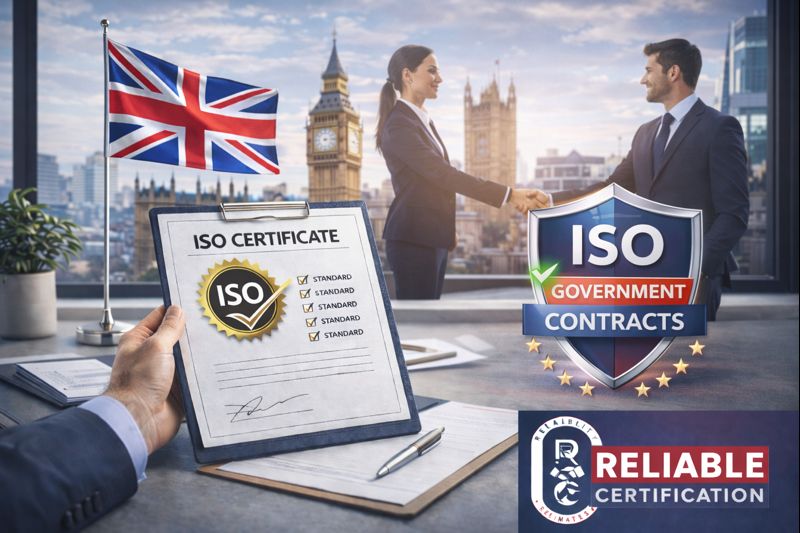
Winning government contracts in the United Kingdom is a competitive challenge for companies of all sizes. Public sector organisations must ensure every supplier is reliable, safe, secure, environmentally responsible, and capable of delivering consistent quality. To prove this, many businesses turn to ISO certification, a globally recognised system that demonstrates strong management practices. As competition increases and procurement requirements evolve, ISO certification becomes more important for suppliers who want to stand out and secure valuable tenders.
Government buyers spend public funds and are responsible for taxpayers’ money, which means they must choose suppliers with proven systems and controlled processes. ISO standards help organisations prove they are committed to quality, sustainability, safety, and continuous improvement. When procurement teams are comparing similar bids, ISO certification often becomes a deciding factor because it offers verified evidence rather than simple promises.
Understanding Government Procurement in the United Kingdom
Government procurement is the process where public bodies purchase goods, services, and construction work. Contracts can range from small office supplies to national infrastructure projects. Every contract must follow strict rules to ensure fairness, transparency, and value for money. Procurement teams need confidence that suppliers can perform professionally and legally throughout every stage of the contract.
Public sector projects often operate under strict deadlines, agreed budgets, and clear public accountability. If a supplier fails to deliver, the effects are not just commercial; they create public inconvenience, reputational damage, and wasted public funds. For this reason, procurement teams carefully examine suppliers’ internal procedures, staff competence, safety records, and security controls. ISO certification provides a structured and externally audited system that reduces these fears and demonstrates responsible management.
Trust is one of the main factors in government procurement. ISO-certified companies follow systematic procedures that reduce errors and increase consistency. This is especially important in the public sector, where one mistake can affect thousands of people. By certifying operations, organisations show that their activities are controlled and transparent at every level.
Government departments need reassurance that the same level of quality delivered in one project will be repeated in future work. ISO certification focuses on consistency, meaning companies reduce variation in their processes. When tasks are performed the same way every time, quality becomes predictable. This predictable output gives procurement evaluators confidence that suppliers can meet strict standards.
ISO 9001 is the international standard for quality management. It helps companies create effective systems that manage customer requirements, reduce waste, and improve performance. For many government tenders, ISO 9001 is either recommended or required because it demonstrates control over every step of service delivery.
When a company reduces mistakes, it protects public funds and improves project outcomes. Procurement officers must be able to demonstrate that their decisions achieve value for money. Companies without quality controls risk delays, rework, and complaints. ISO 9001 ensures every department understands its responsibilities, helping suppliers perform reliably under pressure.
Public sector organisations handle sensitive information, including personal data, financial records, national security details, and confidential plans. Any breach could create serious consequences. ISO 27001, the international standard for information security management, ensures that companies protect confidential information using formal risk-based controls.
Government buyers want suppliers who treat data responsibly. ISO 27001 forces organisations to identify risks, monitor security threats, and respond rapidly to incidents. By presenting this certification, suppliers show they can defend against cyber-attacks and protect confidential information. As cybercrime increases, procurement teams increasingly prioritise certified suppliers.
Environmental responsibility is now a major requirement in UK government contracts. Public authorities must show they are reducing carbon emissions, improving waste management, and supporting national sustainability goals. ISO 14001 helps companies reduce environmental impact using structured planning and continuous improvement.
Procurement teams need evidence that suppliers use resources responsibly. ISO-certified companies document how they reduce pollution, control waste, and improve efficiency. This contributes to the UK’s wider environmental commitments. Suppliers with ISO 14001 often earn additional scoring points in tenders that focus on sustainability.
Health and safety compliance is essential, particularly for construction, manufacturing, and engineering projects. ISO 45001 creates a structured framework for preventing accidents and maintaining a safe working culture. Government bodies prioritise suppliers that can prove safety controls, because workplace incidents can cause costly delays and legal issues.
When safety systems are weak, projects can experience injury claims, inspections, and shutdowns. ISO-certified companies demonstrate that they manage risk at every stage of a project. This helps procurement teams avoid potential liability and protect workers. Companies with ISO 45001 are seen as dependable partners in high-risk sectors.
Documentation is at the heart of ISO certification. Companies must maintain accurate records, standard operating procedures, internal audits, training logs, and improvement reports. For procurement teams, documentation proves that suppliers work systematically rather than reactively.
During tender evaluation, procurement teams ask for policies, records, and process descriptions. Companies without documented systems often struggle to provide proof. ISO certification ensures documentation is consistent, properly formatted, and ready for submission. Well-educated evaluators prefer suppliers who can demonstrate every claim with evidence.
Many tenders use point-based evaluation systems, awarding scores based on quality, safety, security, and environmental management. ISO certification can significantly increase a supplier’s score because it proves competence.
If two suppliers offer similar pricing, the one with ISO certification is more likely to win. Evaluators see certified suppliers as lower-risk, more accountable, and easier to manage. These positive traits often decide the final award outcome. Over time, consistent scoring advantages lead to recurring contract wins and stronger market positions.
UK public sector organisations operate under multiple laws, including environmental regulations, health and safety legislation, and data protection rules. ISO certification structures compliance into everyday operations, reducing legal exposure.
Procurement teams must ensure suppliers follow current laws. If a supplier is non-compliant, the government agency may face public criticism. ISO certification reassures evaluators that internal systems monitor legal changes, train staff, and enforce compliance controls.
ISO standards require companies to regularly review systems, correct issues, set new objectives, and improve performance. Government buyers value suppliers who evolve with new requirements rather than remaining static.
Public procurement evolves as national priorities shift. Continuous improvement ensures suppliers can adjust to new environmental policies, safety regulations, or security controls. A supplier committed to improvement becomes a long-term asset in the public supply chain.
Procurement teams must protect themselves from supplier failure. If a supplier cannot meet deadlines or maintain quality, the effects are highly visible. ISO certification reduces this risk by enforcing structured planning and resource management.
Better control means fewer delays, fewer complaints, and fewer contract disputes. Procurement officers feel safer awarding work to organisations with stable operations. This reliability is one of the strongest selling points of ISO certification.
Winning government contracts improves reputation and industry visibility. ISO certification reinforces that reputation by demonstrating accountability, safety, and environmental responsibility.
When suppliers are certified, other organisations feel more confident partnering with them. Over time, certified suppliers receive more referrals, collaboration opportunities, and business invitations. Strong reputations often lead to long-term frameworks rather than one-time contracts.
Many small and medium-sized businesses struggle to compete against established suppliers. ISO certification helps level the playing field by providing credible evidence of professionalism. Get to know Why Small Businesses Should Consider ISO Certification.
A new business without a long track record can still prove its capabilities through certified systems. This helps procurement evaluators trust new suppliers despite limited history. As a result, more SMEs are now adopting ISO standards to gain access to framework agreements and approved supplier lists.
Tender applications often request proof of quality management, safety systems, data handling, and environmental performance. Without certification, companies must prepare these policies manually.
Certification ensures documentation is already prepared and regularly updated. This means suppliers can submit more applications in less time, increasing their chances of success. Faster submissions expand business opportunities without additional staffing.
Government work can provide stable income for many years. To benefit from this, companies need to think strategically and plan for scaling. ISO standards provide a strong foundation for growth by improving structure, communication, and accountability.
As companies grow, informal processes become risky. ISO certification helps manage expansion by ensuring activities remain controlled. This prevents confusion, delays, and internal breakdowns. Strong foundations are essential for suppliers planning long-term government collaboration.
Public sector procurement is becoming more demanding each year. Trends show increasing focus on sustainability, cybersecurity, and data transparency. Suppliers without structured systems may struggle to adapt.
ISO certification prepares companies for these future requirements by encouraging proactive planning. When regulations evolve, certified suppliers can respond quickly because they already have documented systems in place.
Government procurement frameworks sometimes require certification before submission. Without it, companies may be automatically excluded, regardless of quality or pricing.
Certification opens doors to bidding opportunities that would otherwise be inaccessible. Many suppliers only realise this after repeatedly losing tenders for preventable reasons. ISO certification removes these barriers and expands the scope of eligible contracts.
To learn more about UK procurement rules and opportunities, suppliers can explore official resources such as the public procurement guidance at https://www.gov.uk/guidance/public-sector-procurement. This website provides valuable information about policies, legal frameworks, and supplier expectations. Understanding this guidance alongside ISO certification creates a powerful advantage.
By combining official procurement knowledge with certified systems, suppliers improve their score, reduce risk, and position themselves as highly responsible partners.
The presence of certification demonstrates that a supplier is organised, mature, and ready for high-visibility public sector work. Procurement teams overwhelmingly prefer structured companies because they are easier to manage and less likely to fail.
During final evaluation meetings, procurement officers often choose the supplier who presents the greatest overall confidence. ISO certification strengthens that perception and can become the difference between winning and losing a contract.
Public sector procurement continues to evolve. Government organisations expect higher transparency, stronger security, disciplined environmental management, and consistent quality. ISO certification provides a reliable framework to satisfy these expectations. It also offers tender scoring advantages, supports compliance, strengthens reputation, and reduces risk throughout the supply chain.
Because of these benefits, many suppliers use iso certification to win government contracts and achieve better visibility in the public sector market. By demonstrating strong systems, companies gain trust and credibility, making them more attractive as long-term partners. As regulations tighten and competition increases, certification becomes a powerful strategic tool for business growth.
Is ISO certification required to win UK government contracts?
While it is not legally mandatory for all tenders, many public sector contracts strongly prefer or require ISO certification. It improves tender scoring and proves that your organisation meets strict procurement requirements.
Which ISO certifications are most important for government work?
ISO 9001 for quality management, ISO 27001 for information security, ISO 14001 for environmental management, and ISO 45001 for workplace safety are the most commonly requested standards in UK tenders.
Do small and medium businesses need ISO certification to compete?
Yes, ISO certification helps SMEs compete with larger suppliers by providing credible, externally audited proof of professional systems and capability, even without a long supply history.
How long does ISO certification take to complete?
The timeline varies depending on organisation size and readiness. Most companies achieve certification within three to six months with the right support.
Can ISO certification improve tender scores?
Absolutely. Many tenders use point-based scoring systems, and ISO-certified suppliers often score higher in areas such as quality, safety, sustainability, and governance.
Is ISO certification recognised outside the UK?
Yes, ISO is globally recognised. UK suppliers can use these certifications to access international procurement opportunities and overseas government projects.
Can ReliableCert.uk help with tender documentation support?
Yes. ReliableCert.uk provides guidance, document preparation assistance, and audit support to ensure your organisation meets procurement expectations confidently
 1
1
Typically replies within 30 minutes