02031613720
Discover how ISO certification helps reduce risk in British organisations by improving security, quality, safety, compliance, and resilience. Learn why UK businesses use ISO standards to protect operations and strengthen performance.
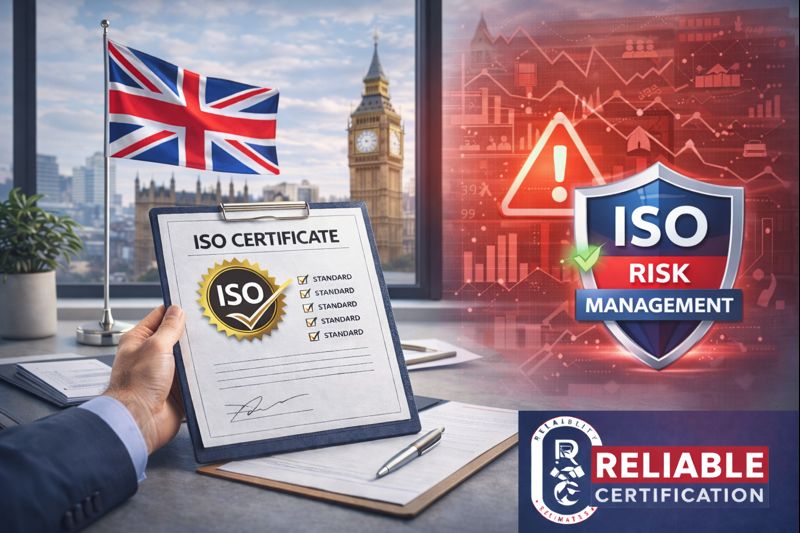
British organisations operating in today’s competitive environment face increasing pressure to manage risk effectively. Government regulations are becoming stricter, cyber-threats continue to grow, environmental expectations are rising, and customer demands are more complex than ever before. Many companies are now turning to ISO certification because it provides structured processes that identify, assess, and control risks before problems damage operations. Businesses across the UK are discovering how international standards create safer workplaces, protect confidential information, improve service quality, reduce environmental impact, and strengthen overall resilience. This strategic approach is becoming essential, particularly as public sector clients and large private enterprises demand greater proof of risk management capability.
As expectations increase, organisations without structured systems often struggle to compete. They may face compliance issues, operational failures, customer complaints, or reputational damage. ISO certification helps reduce risk in British organisations by establishing clear rules for process control, staff responsibility, documentation, and continuous improvement. Certified companies gain confidence knowing that every part of their business is working according to verified international best practice. Accuracy, consistency, and accountability become part of daily operations, reducing stress and uncertainty for managers and stakeholders.
British organisations face a wide range of risks that can disrupt operations, reduce profits, and damage credibility. These include data security incidents, quality failures, health and safety breaches, environmental non-compliance, supply chain issues, and legal penalties. Each industry experiences risk differently, but all companies share the responsibility to protect customers, employees, and the environment. When risk management is weak, organisations may experience downtime, financial losses, legal consequences, or customer dissatisfaction. The consequences can escalate quickly, especially in competitive industries where reputation influences purchasing decisions.
The modern world is faster and more interconnected than ever before. Digital systems create opportunities, but they also expose companies to cybercrime and data theft. Environmental expectations from government authorities continue to grow, and health and safety regulations are strictly enforced. Customers expect reliable service, secure transactions, responsible operations, and ethical supply chains. When organisations cannot demonstrate responsible management, they may lose contracts, damage their brand, and face regulatory penalties. ISO certification helps companies introduce structured frameworks that address these expectations while improving internal efficiency.
Quality failures can cause lost customers, increased complaints, warranty claims, and product returns. ISO 9001 focuses on creating strong quality management systems that prevent mistakes and improve customer satisfaction. This standard requires companies to define processes, monitor performance, and correct errors quickly. When quality is controlled, risks related to defects, rework, and poor communication decrease dramatically.
ISO 9001 introduces structured procedures and documentation that guide employees in performing tasks consistently. Organisations learn how to identify root causes of issues rather than applying temporary fixes. As systems improve, customer response becomes more predictable and trust increases. Procurement teams often require ISO 9001 certification when selecting suppliers because it reduces risk across the supply chain.
ISO 27001 and the Mitigation of Cybersecurity Risk
Cybersecurity threats are one of the most significant risks facing British organisations today. Data breaches create financial losses, legal responsibilities, brand damage, and disruption to essential services. ISO 27001 provides a comprehensive approach to information security management by identifying vulnerabilities, implementing protective measures, and monitoring threats continuously. This standard helps organisations demonstrate compliance with the UK GDPR and other legal requirements.
Employees are often the biggest security weakness because of human error. ISO 27001 requires training, policy enforcement, secure access, and regular audits. When staff understand security responsibilities, the risk of data leaks decreases. This certification is increasingly required for suppliers working with government departments, financial service providers, and healthcare organisations.
ISO 14001 and the Reduction of Environmental Risk
Environmental reputation matters both legally and commercially. British organisations are expected to comply with environmental regulations, reduce waste, conserve resources, and control emissions. ISO 14001 helps companies manage environmental impact using structured planning and continuous improvement. When implemented properly, this certification reduces the risk of fines, prosecution, and negative publicity.
Customers and regulators monitor environmental behaviour closely. Companies that operate responsibly earn trust, while those that cause pollution may lose contracts or face media criticism. ISO 14001 helps organisations monitor environmental performance, prevent spills, and use resources more efficiently.
Accidents in the workplace can result in injury claims, equipment damage, legal penalties, lost productivity, and staff dissatisfaction. ISO 45001 helps create safe working environments by improving hazard identification, risk assessment, and employee training. It requires organisations to monitor incidents, investigate near misses, and encourage safety communication across all departments.
When organisations reduce accident frequency, insurance premiums drop and staff morale improves. ISO 45001 demonstrates a strong commitment to employee well-being, which can improve recruitment and retention. Government authorities and large construction contractors often require suppliers to have a certified safety system to minimise liability.
Disruptions can come from power failures, cyberattacks, supply chain interruptions, natural disasters, or global crises. ISO 22301 creates systems that help organisations continue operating even when unexpected events occur. Business continuity planning ensures that essential services, customer commitments, and critical operations continue with minimal downtime.
British organisations depend on consistent delivery. When operations shut down, customers may switch to competitors. ISO 22301 ensures backup plans, disaster recovery measures, and resource allocation strategies are in place. Continuous readiness prevents financial loss and protects reputation over time.
British laws require companies to manage data responsibly, protect employees, avoid pollution, and ensure product safety. When companies fail to comply, regulators can issue penalties, suspensions, or prohibition notices. ISO certification integrates legal responsibilities into daily operations. Organisations can easily demonstrate compliance during inspections or audits, protecting themselves from legal consequences.
Regulators prefer organisations with structured systems because documentation demonstrates control, accountability, and performance. ISO certification establishes clear record keeping practices that demonstrate compliance. This reduces anxiety during audits and protects the company’s rights if disputes arise.
Supply chains are increasingly complex and interconnected. When a supplier fails, organisations may face delays, cost increases, or shortages. ISO certification improves supplier selection and vendor monitoring by requiring organisations to assess risk at every stage of the supply chain. Certified suppliers must maintain consistent performance, quality systems, and security procedures.
When companies evaluate suppliers according to ISO criteria, weak partners are identified early. This prevents serious consequences later in the project lifecycle. Procurement teams benefit from stronger coordination, documentation, and communication, resulting in efficient delivery and stable performance.
Customers want proof that brands operate responsibly. ISO certification provides independent verification, which builds trust. When companies show that their systems are internationally recognised, customers feel more secure in their purchasing decisions. This reduces the risk of lost business due to uncertainty.
British organisations with certifications often outperform competitors because customers value reliability. Certification improves perception, supports marketing messages, and attracts larger clients. When trust increases, retention rises, reducing revenue risk significantly.
Supporting Continuous Improvement and Risk Prevention
ISO certification requires regular internal audits, corrective actions, management reviews, and training. These activities produce ongoing improvement and prevent issues from reappearing. When companies learn from mistakes, risks decrease naturally over time.
Industries change quickly, and risks evolve. Continuous improvement ensures policies, systems, and processes stay relevant. Organisations that regularly update procedures are better prepared to face future uncertainty.
British organisations must comply with UK GDPR. Data mismanagement can lead to severe fines, media attention, and lost customer confidence. ISO certification introduces structured controls that classify data, restrict access, and monitor digital systems. When privacy is protected, legal and reputational risks decrease.
Hackers frequently target businesses storing personal information. ISO-based controls reduce opportunities for attack and ensure faster response when incidents occur. This gives organisations confidence when storing, transmitting, and processing sensitive information.
Risk often creates financial unpredictability. When errors increase, costs rise. ISO certification puts structure into operations, which reduces waste, improves resource planning, and prevents expensive mistakes.
Consistent processes lead to stable performance. Financial risk decreases when organisations know what to expect from suppliers, employees, and systems. Accurate forecasting supports investment planning and helps companies grow responsibly.
For more information on risk and compliance guidance in the UK, organisations can explore the official Government Health and Safety Executive website available at https://www.hse.gov.uk. This resource provides regulatory requirements, risk control advice, and industry expectations that complement ISO systems.
When businesses use official government advice alongside ISO systems, they achieve both compliance and continuous performance improvement. This combined approach strengthens risk management capability across all operational levels.
Future risk is unpredictable. Whether caused by global supply disruptions, new legislation, digital attacks, or environmental demands, British organisations must be ready. ISO certification creates flexible systems that adapt quickly. When uncertainty arises, certified companies can respond calmly because responsibilities are already defined.
Resilience means surviving disruption faster than competitors. With ISO systems implemented, organisations reduce downtime, control costs, and protect clients from disruption. This earns brand respect and long-term loyalty.
Effective risk management is no longer optional. Organisations that ignore modern risks face financial losses, legal penalties, customer complaints, and reputational damage. ISO certification helps reduce risk in British organisations by creating structured, disciplined processes that improve security, quality, environmental control, safety, resilience, and regulatory compliance. This framework produces long-term benefits, stronger financial performance, and a more confident workforce. As expectations continue to increase, certification becomes an essential tool for sustainable success.
Is ISO certification required in the UK?
No, ISO certification is not always required, but many customers prefer working with certified companies because it reduces risk and proves reliability.
How does ISO certification help reduce risk?
It introduces clear processes, regular checks, and staff training. This prevents mistakes, improves safety, and protects important information.
Can small businesses benefit from ISO certification?
Yes, small businesses gain credibility, win more contracts, and improve their internal processes.
Which ISO standards reduce risk the most?
ISO 9001 improves quality, ISO 27001 protects data, ISO 14001 manages environmental impact, and ISO 45001 improves workplace safety.
Does ISO certification improve reputation?
Yes, it shows customers and regulators that the organisation works safely and responsibly
 1
1
Typically replies within 30 minutes