02031613720
Learn how fire extinguisher training works, how to use extinguishers safely, and why proper training is essential for workplace fire safety.
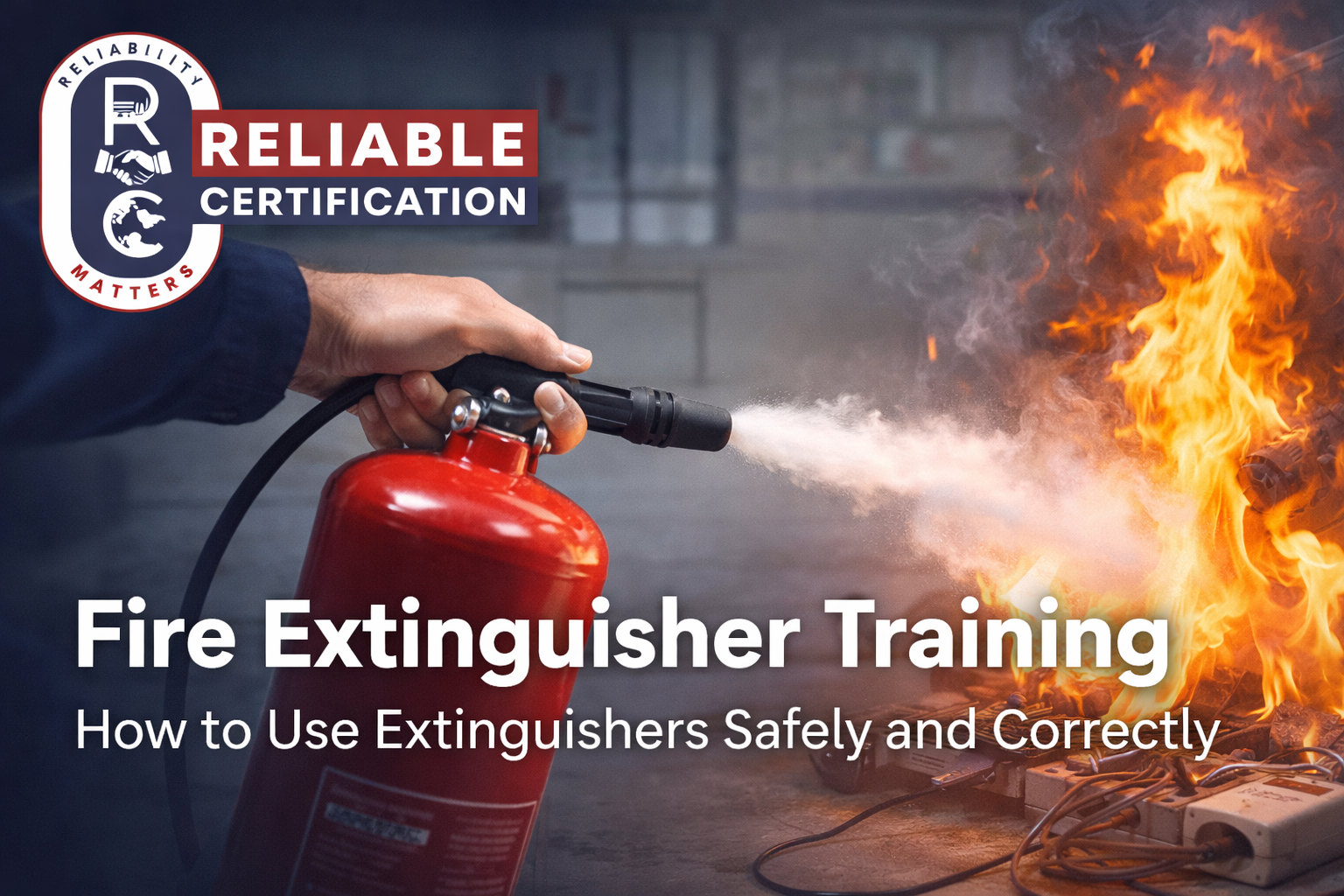
Fire extinguisher training is a vital part of workplace fire safety, ensuring employees can respond quickly and effectively in the early stages of a fire. Knowing how to use the correct extinguisher, understanding different fire types, and following safe procedures can significantly reduce risk to people, property, and business operations.
In many workplaces, fire incidents start small but can escalate rapidly if handled incorrectly. Without proper training, using the wrong extinguisher especially on electrical fires can make the situation worse. This is why structured fire extinguisher training is essential for staff at all levels.
Fire extinguisher training teaches individuals how to identify fire risks, select the correct type of extinguisher, and use it safely in an emergency.
The training is typically part of wider fire safety education and may be included in workplace induction or refresher training programmes. It can also be delivered as a standalone fire extinguisher course for those responsible for fire safety.
A structured course will usually cover:
This training ensures that employees do not panic and can act responsibly during a fire emergency.
Fire extinguisher training is not just about using equipment — it is about making safe decisions under pressure.
Without proper training, even a well-placed extinguisher may be useless in an emergency.
Understanding extinguisher types is a core part of any fire extinguisher training course.
Knowing which extinguisher to use is critical. For example, using water on an electricity fire can cause serious injury.
Most fire extinguisher training courses teach the PASS technique:
Training reinforces that extinguishers are for small, contained fires only.
Electricity fires require special attention and are a key focus in training.
Employees must understand the risks of electrical fires, including shock hazards and equipment damage.
Proper fire extinguisher training ensures that the correct extinguisher is used in these situations.
A professional fire extinguisher course is designed to provide both theory and practical knowledge.
Courses such as a BAFE fire extinguisher training programme or fire extinguisher servicing course may also include:
These courses are especially useful for fire marshals, safety officers, and maintenance personnel.
Training also highlights the importance of extinguisher maintenance.
Regular servicing ensures that extinguishers:
A fire extinguisher servicing course teaches how to:
Proper maintenance is just as important as correct usage.
Fire extinguisher training is relevant across many industries.
In high-risk environments, more advanced training may be required.
Imagine a small electrical fire starting in an office printer.
A trained employee would:
An untrained person might use water — creating a dangerous situation.
This example shows how training directly impacts safety outcomes.
When selecting a course, consider:
A good course should be clear, practical, and aligned with workplace risks.
Fire extinguisher training is an essential part of workplace safety, helping employees respond quickly and correctly in the early stages of a fire. Understanding different extinguisher types, knowing how to use them safely, and recognising when to evacuate can prevent serious incidents.
Whether you are an employee, supervisor, or safety officer, proper training provides the knowledge and confidence needed to act responsibly during emergencies.
Investing in structured fire extinguisher training is a practical step towards creating a safer and more prepared workplace.
1. What is fire extinguisher training?
Fire extinguisher training teaches individuals how to safely use extinguishers, identify fire types, and respond effectively to small fires.
2. How long does a fire extinguisher course take?
Most courses can be completed in a few hours, depending on the level of detail and whether practical training is included.
3. Can I use a water extinguisher on an electrical fire?
No, water should never be used on electrical fires. Use a CO₂ or dry powder extinguisher instead.
4. What is a BAFE fire extinguisher course?
A BAFE-related course follows recognised standards for fire safety training and may include servicing and compliance guidance.
5. Is fire extinguisher training mandatory?
Employers are required to provide adequate fire safety training, which often includes extinguisher use.
6. Do fire extinguishers need servicing?
Yes, regular servicing is required to ensure they function correctly and meet safety standards
 1
1
Typically replies within 30 minutes