02031613720
Common ISO 9001 Audit Non-Conformities Explained
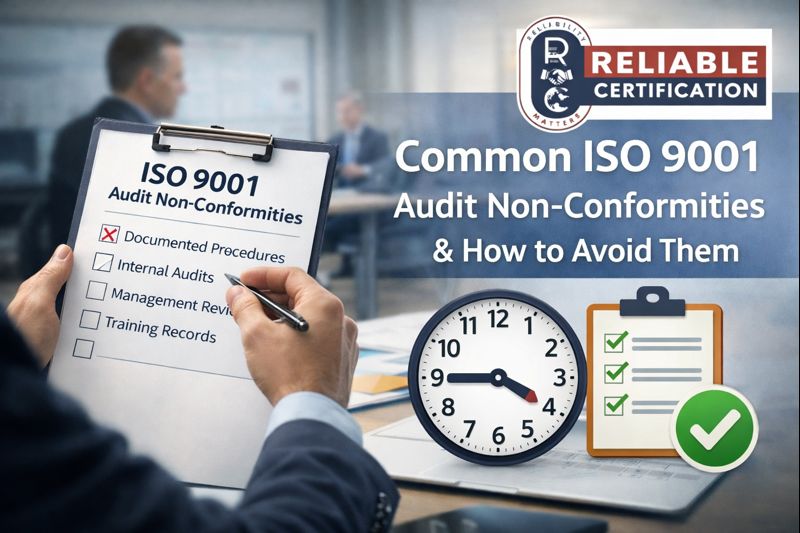
ISO certification audits are not designed to catch organisations out. Their real purpose is to check whether systems are working as intended and whether improvements are being made over time. Even so, many organisations are surprised when non-conformities are raised during an audit.
Understanding why these issues occur, and how they can be avoided, helps organisations approach audits with more confidence and less stress. This guide explains the most common ISO 9001 audit non-conformities in clear, practical terms and shows how simple awareness and good habits can prevent them.
ISO 9001 is built around the idea that organisations should say what they do, do what they say, and check that it works. Audits are used to confirm this.
During an audit, assessors look for evidence that processes are defined, followed, and reviewed. When something does not meet the standard’s requirements, it is recorded as a non-conformity. This does not mean failure. It simply highlights an area that needs correction or improvement.
Non-conformities are generally classed as either minor or major, depending on their impact on the system.
Imagine a small manufacturing business that has documented how customer complaints are handled. On paper, the process looks clear. However, during the audit, staff explained that complaints are usually handled informally and not recorded.
Even though the organisation has a procedure, it is not being followed in practice. This gap between documentation and reality is one of the most common causes of non-conformities.
This example reflects the intent behind ISO 9001: systems must be real, not theoretical.
A non-conformity is raised when an organisation does not meet a specific requirement of the standard. These findings matter because they show where the system may not be reliable or consistent.
Addressing non-conformities improves trust in the management system. It also helps prevent larger problems such as repeated errors, customer complaints, or compliance risks.
While every organisation is different, certain issues appear repeatedly across industries. These are not complex technical failures, but everyday management gaps.
One of the most frequent non-conformities relates to document control. Organisations may have procedures, forms, or records, but they are often outdated, incomplete, or not consistently used.
Auditors commonly find that staff are using old versions of documents or that records expected by the system are missing. This usually happens when document updates are not communicated clearly or responsibilities are unclear.
Avoiding this issue starts with keeping documents simple, relevant, and accessible, and ensuring people know where to find the latest versions.
ISO 9001 requires evidence that processes are implemented, not just written down. Many non-conformities arise when organisations cannot show records that prove activities are carried out as planned.
This may include missing training records, incomplete inspection logs, or undocumented reviews. In most cases, the work has been done, but evidence has not been kept.
Creating simple, practical records that fit naturally into daily work helps avoid this problem.
Internal audits are a key requirement of ISO 9001, yet they are often treated as a formality. Auditors frequently find that internal audits are rushed, poorly planned, or not followed up properly.
When internal audits fail to identify real issues, the same problems are later found during external audits. This leads to avoidable non-conformities.
Effective internal audits should focus on how work actually happens, not just whether documents exist.
Management review is meant to show leadership involvement in the quality management system. A common non-conformity occurs when reviews are too brief, irregular, or lack meaningful discussion.
Auditors expect to see that management considers performance trends, risks, customer feedback, and improvement opportunities. When reviews are treated as a tick-box exercise, the intent of the standard is not met.
Regular, structured discussions with recorded outcomes help demonstrate genuine leadership engagement.
Another frequent issue is staff uncertainty about their responsibilities within the quality management system. If people cannot explain their role, or how their work affects quality, auditors may raise concerns.
This usually points to weak communication rather than poor performance. Clear role descriptions and simple awareness training can significantly reduce this risk.
ISO 9001 encourages organisations to think about risks and opportunities that could affect outcomes. Non-conformities occur when this thinking is missing or undocumented.
This does not require complex risk models. Auditors look for evidence that organisations consider what could go wrong and take reasonable steps to prevent it.
Simple discussions and practical actions are often enough.
Although this guide focuses on ISO 9001, similar non-conformities appear in other international standards.
For example, ISO 14001 audits often raise issues around incomplete environmental records, while ISO 45001 audits frequently identify gaps in hazard awareness.
In information security systems such as ISO 27001, auditors commonly find undocumented controls or inconsistent access management.
The underlying theme is always the same: systems must reflect reality.
Avoiding non-conformities does not require perfection. It requires awareness, consistency, and honesty about how work is done.
Organisations that succeed tend to focus on keeping systems simple, ensuring people understand them, and reviewing them regularly. When processes make sense to staff, compliance follows naturally.
Regular internal checks, open communication, and leadership involvement are far more effective than last-minute audit preparation.
Many organisations view non-conformities as negative. In reality, they are a normal part of the improvement process.
A non-conformity highlights an opportunity to strengthen the system. Addressing it improves reliability and reduces future risk. Over time, fewer issues are raised because the system matures.
ISO certification is not about avoiding findings; it is about learning from them.
Organisations that understand common audit issues approach certification with confidence. They see audits as a review of performance, not a test to be feared.
This mindset supports stronger compliance, better quality outcomes, and increased trust with customers and stakeholders.
Common ISO 9001 audit non-conformities usually stem from everyday management gaps, not major failures. Most can be avoided by aligning documented processes with real work, involving leadership, and maintaining clear records.
When organisations treat ISO 9001 as a practical management tool rather than a paperwork exercise, audits become more meaningful and far less stressful.
A non-conformity in an ISO 9001 audit means a requirement of the standard has not been fully met. It highlights an area that needs correction or improvement.
Yes, non-conformities are common and expected. Many organisations receive minor findings during audits, especially during early certification or system changes.
No. Most non-conformities are minor and can be corrected within an agreed time. Certification is usually granted once evidence of correction is provided.
Common causes include missing records, outdated documents, weak internal audits, or processes not being followed as written.
Yes. Similar issues are often seen in audits for ISO 14001 and ISO 45001, as all ISO systems rely on consistency and evidence.
 1
1
Typically replies within 30 minutes