02031613720
Reliable Certification supports rail companies, suppliers, contractors, maintenance firms, infrastructure providers, signalling specialists and rolling stock businesses with practical ISO certification guidance. Rail work needs strong control over safety, quality, environmental responsibility, staff protection, supplier performance and audit readiness. Suitable standards may include ISO 9001 for quality management, ISO 14001 for environmental management, ISO 45001 for occupational health and safety, ISO 27001 for information security, ISO 22301 for business continuity and ISO 50001 for energy management where relevant. Our team can support your organisation with gap analysis, certification guidance, audit preparation, implementation support, internal audit support, staff awareness and ongoing compliance guidance. With the right ISO system, rail businesses can improve reliability, reduce operational risk, support tender requirements and build stronger confidence with clients, contractors and supply-chain partners.
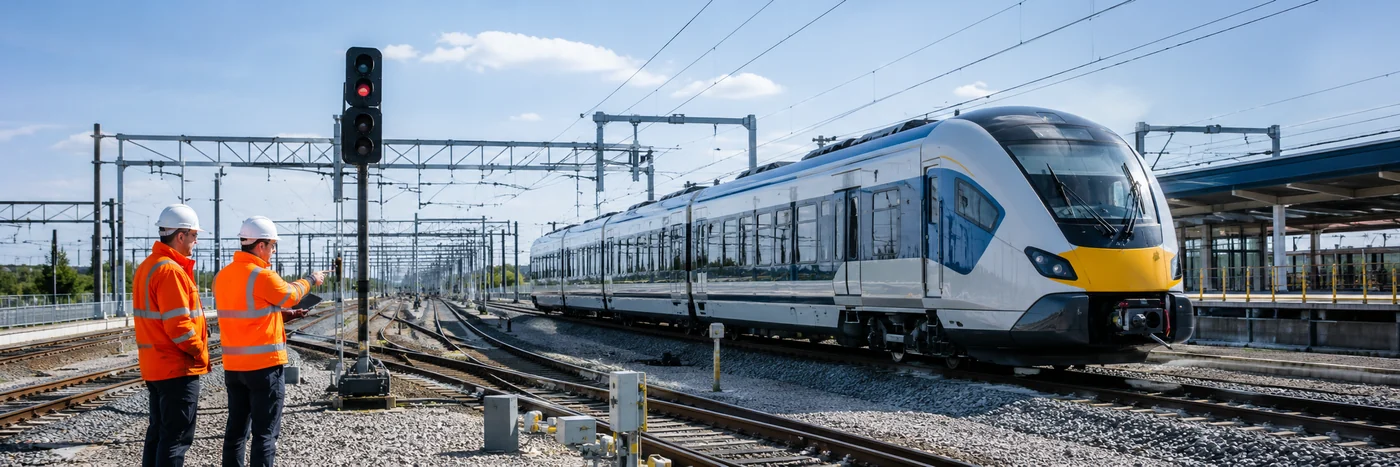 Railway Industry
Railway Industry
Railway Industry
By submitting your information, you are agreeing to our Terms & Conditions and our Privacy Policy.
Rail work is safety-critical, highly coordinated and closely monitored. Whether an organisation works in infrastructure, maintenance, rolling stock, signalling, telecoms, station services, rail technology, cleaning, facilities management or contractor support, effective management controls and reliable records are important.
ISO management system certification provides independent evidence that an organisation’s management system has been assessed against recognised requirements. Depending on the requested certification scope, relevant areas may include quality, occupational health and safety, environmental management, information security and business continuity.
Reliable Certification provides independent management system certification for eligible railway companies, suppliers and contractors. Our role is to conduct certification activities and assess conformity against the applicable standard and defined certification scope.
Where certification is required for a rail contract, supplier approval, procurement framework or customer requirement, the organisation should determine the applicable certification requirement and submit it for certification review.
Contact our certification team to submit your requirements and request a certification quotation.
ISO certification may be relevant to organisations that provide products, services or support across the railway supply chain, particularly where customers, contracts, procurement frameworks or internal governance requirements call for recognised management system certification.
Certification may be relevant to:
Certification can provide independent evidence of conformity to support buyer, supplier, contract or framework requirements where applicable.
Railway ISO certification is the independent assessment of an organisation’s management system against the requirements of an applicable ISO standard.
ISO 9001 addresses quality management, ISO 45001 addresses occupational health and safety, ISO 14001 addresses environmental management, ISO/IEC 27001 addresses information security and ISO 22301 addresses business continuity.
Certification audits evaluate objective evidence to determine whether the management system conforms to the applicable requirements and defined certification scope.
The organisation remains responsible for its management system, operational controls, legal and regulatory obligations, internal audits, management reviews and corrective actions.
Rail operations involve multiple activities, contractors, suppliers, assets, information systems and safety-critical processes. Weak controls in communication, maintenance, supplier management, safety checks or documented information can affect project delivery, service reliability and customer confidence.
Management systems based on applicable ISO standards provide structured requirements for controlling these areas. Certification independently assesses conformity against those requirements.
Reasons rail organisations may seek certification include:
Certification does not guarantee legal compliance, contract award, operational performance or the absence of risk.
A track maintenance contractor may seek ISO 45001 certification where occupational health and safety management is a customer or organisational requirement. A signalling supplier may seek ISO 9001 certification for its Quality Management System. A rail technology provider may seek ISO/IEC 27001 certification where information security forms part of the requested certification scope.
ISO 9001 specifies requirements for a Quality Management System covering areas such as customer requirements, operational processes, supplier controls, monitoring, internal audits, management review, nonconformities and corrective actions.
For rail contractors and suppliers, relevant processes may include project delivery, inspections, service controls, supplier evaluation, records and customer requirements.
ISO 45001 specifies requirements for an Occupational Health and Safety Management System. It may be relevant where rail activities involve trackside work, depots, maintenance, electrical systems, construction activities, machinery, manual handling, working at height or contractor coordination.
Certification assesses the organisation’s OH&S management system against the applicable requirements using objective audit evidence.
Rail projects and services may involve fuel use, waste, noise, site works, emissions, materials, water use and other environmental aspects. ISO 14001 specifies requirements for an Environmental Management System covering identification of environmental aspects, applicable obligations, operational controls, objectives, monitoring and continual improvement.
Certification independently assesses whether the environmental management system conforms to the applicable ISO 14001 requirements.
Rail technology and support services may rely on digital systems, operational data, supplier portals, project information, monitoring tools and communication platforms.
ISO/IEC 27001 specifies requirements for an Information Security Management System and may be relevant to signalling providers, software businesses, IT support providers, cyber security suppliers and other organisations handling sensitive information.
Rail services and supply-chain activities may be affected by disruption, cyber incidents, supplier failure, equipment issues, severe weather, emergency events or staff shortages.
ISO 22301 specifies requirements for a Business Continuity Management System and may be relevant where continuity of critical rail-related activities forms part of the certification scope.
Reliable Certification provides independent certification activities for rail companies, suppliers and contractors.
Certification activities may include:
Reliable Certification does not design, develop or operate client management systems, conduct client internal audits, prepare clients for certification audits or provide client-specific management system or compliance consultancy.
The organisation remains responsible for determining its certification needs and for maintaining its management system and applicable controls.
Contact our certification team for information about the certification services available within our scope.
Independent ISO certification can provide evidence that a rail organisation’s management system has been assessed against recognised requirements.
Potential benefits include:
The business benefits achieved from operating a management system depend on the organisation’s own controls, resources, leadership and activities. Certification itself does not guarantee commercial or operational outcomes.
Rail work may involve trackside locations, depots, electrical systems, moving vehicles, machinery and operational environments. ISO 45001 provides requirements for managing occupational health and safety hazards and risks.
Rail suppliers may be required to provide evidence of recognised management system certification. Organisations should determine the specific certification requirements stated by the customer, tender or procurement framework.
Rail projects often involve specifications, deadlines, supplier controls and multiple interested parties. ISO 9001 provides requirements relating to quality management, process control, monitoring, nonconformities and corrective actions.
Infrastructure, maintenance and depot activities may create environmental aspects relating to waste, materials, emissions, energy use, spills, noise and site activities. ISO 14001 provides requirements for managing environmental aspects and applicable obligations.
Modern rail activities may depend on data, software, telecoms, monitoring systems and connected technology. ISO/IEC 27001 provides requirements for managing information-security risks within an Information Security Management System.
ISO 22301 provides requirements for a Business Continuity Management System and may be relevant where organisations need to maintain critical activities during disruption.
Certification audits require objective evidence that the applicable management system requirements are being met. This may include documented information, records, internal audit results, management review, monitoring, corrective actions and operational evidence relevant to the certification scope.
The organisation submits information about its rail activities, requested certification standard, proposed certification scope, number of employees, locations and other relevant details.
Reliable Certification reviews the submitted information to determine the applicable certification arrangements, including scope, audit duration, competence requirements, locations and ability to perform the requested certification activities.
A certification quotation is determined based on the application and applicable audit requirements. Following acceptance, audit activities are planned according to the certification requirements.
Where applicable, Stage 1 evaluates relevant management system information and readiness to proceed to Stage 2. Any areas of concern are formally communicated to the organisation.
The Stage 2 audit evaluates the operation and effectiveness of the management system against the applicable standard requirements. Evidence may include interviews, records, operational controls, monitoring, internal audits, management reviews and corrective actions.
Any identified nonconformities are formally reported. The organisation remains responsible for determining and carrying out appropriate correction and corrective action.
Following completion of applicable audit activities, relevant audit information is independently reviewed. The certification decision is made by authorised personnel who were not involved in conducting the audit.
Where a positive certification decision is made, Reliable Certification issues the applicable certificate. Interested parties can use the certificate verification facility to check relevant certificate information.
Certified organisations are subject to planned surveillance activities during the certification cycle. Recertification activities are undertaken before completion of the certification cycle where continued certification is requested.
Reliable Certification provides independent management system certification services for eligible railway businesses, contractors and suppliers.
Our certification activities include:
If your organisation requires ISO certification for quality, occupational health and safety, environmental management, information security or business continuity, Reliable Certification can independently assess the management system against the applicable standard and certification scope.
Certification services within our public scope include IMS covering ISO 9001, ISO 14001 and ISO 45001, ISO/IEC 27001 and ISO 22301.
Submit your certification requirements and request a quotation.
Certification cost and timeframe depend on factors including the applicable standard, scope, organisation size, number of locations, complexity and required audit duration.
What ISO certification is relevant to railway companies?
The applicable standard depends on the organisation’s activities and certification requirements. Reliable Certification provides IMS certification covering ISO 9001, ISO 14001 and ISO 45001, together with ISO/IEC 27001 and ISO 22301 where applicable.
Do rail suppliers need ISO certification for tenders?
Some tenders, contracts and supplier-approval processes may require recognised management system certification. Organisations should determine the exact requirements stated by the relevant customer or procurement process.
Why is ISO 9001 relevant to rail suppliers?
ISO 9001 specifies requirements for a Quality Management System and may be relevant to rail suppliers managing customer requirements, service or production controls, suppliers, monitoring, nonconformities and corrective actions.
Why is ISO 45001 relevant to rail contractors?
ISO 45001 specifies requirements for an Occupational Health and Safety Management System and may be relevant where rail activities involve significant workplace hazards and risks.
Is ISO 14001 relevant to rail infrastructure and maintenance companies?
Yes. ISO 14001 may be relevant where rail-related activities create environmental aspects such as waste, emissions, fuel use, materials, noise, spills or site impacts.
Can rail technology providers seek ISO/IEC 27001 certification?
Yes. ISO/IEC 27001 may be relevant to rail technology, software, telecoms, cyber security and data-service providers where sensitive information is managed within an Information Security Management System.
What is ISO 22301 used for in the rail sector?
ISO 22301 specifies requirements for a Business Continuity Management System and may be relevant where rail organisations need to maintain critical activities during disruption.
How does Reliable Certification provide certification services to railway businesses?
Reliable Certification provides independent management system certification activities including application and contract review, audit planning, Stage 1 and Stage 2 audits where applicable, formal reporting of findings, independent certification review and decision, surveillance, recertification and certificate verification.
Certification arrangements are determined following application and contract review and depend on the applicable standard, scope, organisation size, complexity and other relevant factors.
 1
1
Typically replies within 30 minutes